
Gap Analysis
Close disclosure gaps. Get assurance-ready.
WHY IS A GAP ANALYSIS IMPORTANT?
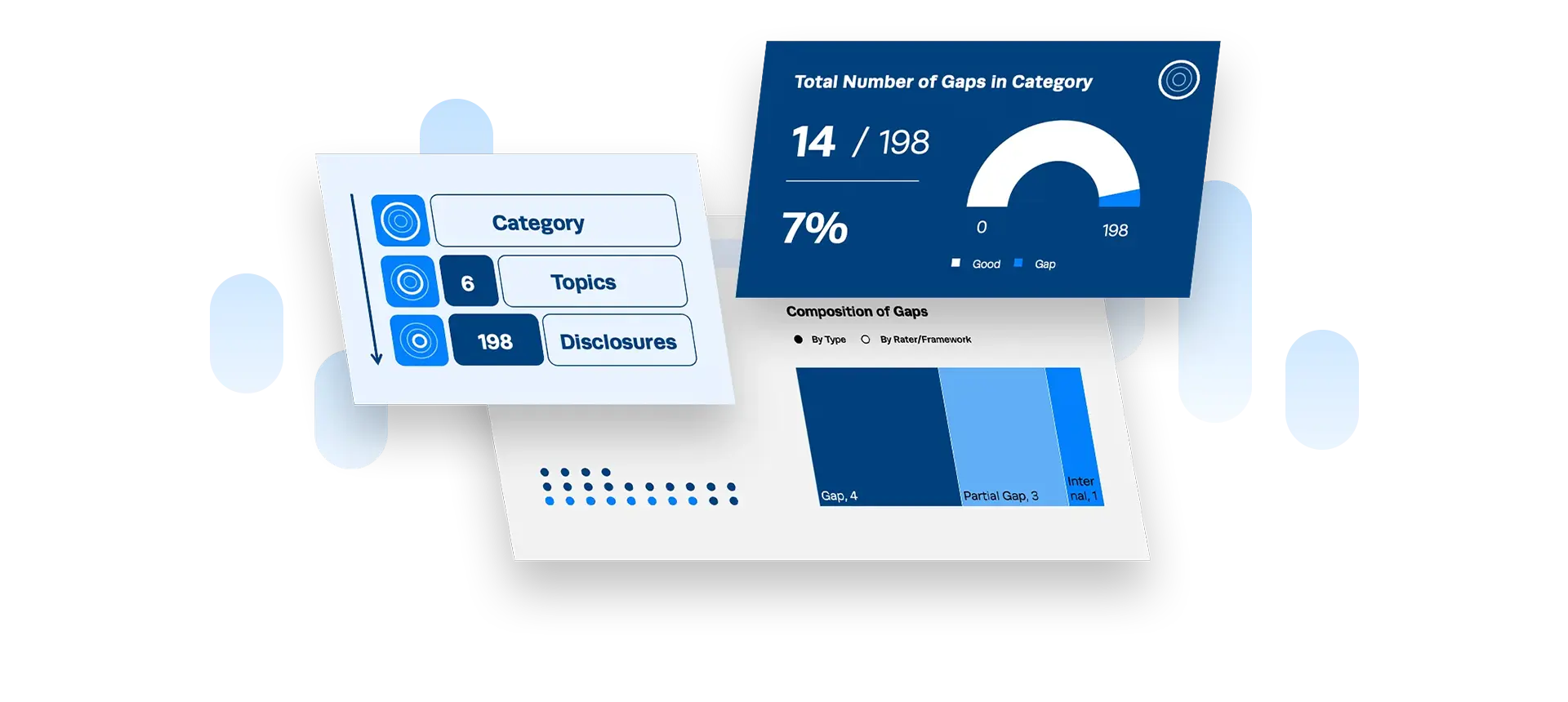
Examining the requirements of a standard, regulation, or stakeholder request and comparing it to your current practices results in a clear roadmap of next steps to bridge any gaps.

Regulatory compliance & credibility
Compare current policies, actions, targets, and reporting against sustainability standards (ESRS, GRI, ISSB, SASB, TCFD, TNFD and others)

Stakeholder expectations
Understand and develop a plan to meet your stakeholder expectations from customers, investors, employees, partners, and more.

Complexity reduction
Find, prioritize, and streamline commonalities between competing standards, frameworks, and other requirements in the near- and long-term.
How we conduct a gap analysis
Define scope of the assessment (e.g., sustainability standards, surveys, or regulations)

Itemize the elements of each framework, including mandatory and voluntary components

Review publicly-available information and record which elements are full or partial gaps

Prioritize common elements between frameworks for an actionable, strategic roadmap

Assign internal subject matter experts to each action for sponsorship and accountability


A rigorous gap analysis turns daunting and competing requirements into a targeted plan so that you can prioritize and maximize efforts to meet your desired outcome.
Louis D. Coppola
Chief Executive Officer & Co-FounderUnderstanding the Mission
For companies new to sustainability, we frequently assess the completeness of their greenhouse gas inventory against the Greenhouse Gas (GHG) Protocol, alignment with the GRI or SASB Standards, or simply the various data requests they receive from customers. Other common assessments are for ESRS and ISSB alignment, or survey improvements such as EcoVadis, S&P CSA and CDP.
G&A can provide leading peer examples of disclosure to educate what good disclosure looks like in the areas identified with gaps as part of the gap analysis process. G&A can also assist in developing new policy language, governance processes, data collection processes and develop custom training and capacity building. After the Gap Analysis is complete, G&A can work with clients to develop customized plans to organize priorities, and assist with filling gaps.
A gap analysis can range from 20 data points for a SASB Standard, to hundreds of data points across for the ESRS.
Let's start a conversation.
related Services
Explore what else G&A can offer















Understand what’s shaping sustainability.
Dive into blog posts that break down trends and emerging issues.
Explore the Blog
 October 15, 2025