Scope 1 & 2 GHG Emissions Inventory
Understand the climate impacts of your operations
Talk to Our Experts
Inform Your Climate Strategy
G&A helps measure GHG emissions across a wide variety of industries

Why measure emissions?
Benefits of conducting a greenhouse gas inventory

Enhance efficiency
Understand emissions hotspots and develop strategies to reduce them

Inform strategy
Use data to prioritize investment and action on high-emission areas of business

Reduce costs
Minimize fuel usage and energy spending

Stay competitive
Measure emissions - it is a market essential to build trust and leadership with investors and customers

Ensure compliance
Align with mandatory regulations like California’s SB 253 and the EU’s CSRD
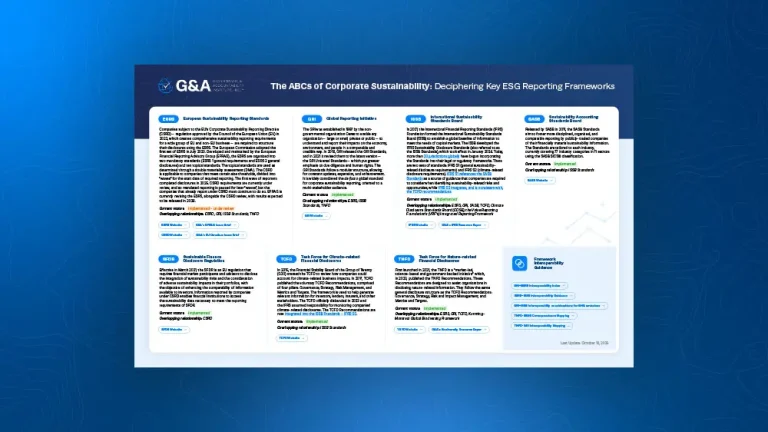
A GHG inventory enables alignment with key disclosures, including:



How does G&A measure GHG emissions?
Review GHG accounting standards and develop a plan

Identify data requirements and fill gaps

Calculate emissions using appropriate emissions factors and methodologies

Conduct quality assurance checks and summarize findings to share with stakeholders


A comprehensive emissions inventory, including all activity data, calculations, emissions factors, and results for the reporting period
A document detailing the company’s GHG inventory process, including the inventory scope and boundaries, data collection methodology, and quality assurance and control procedures
A high-level emissions inventory report that identifies key findings, including emissions by scope, emission intensity metrics, largest emission sources, and reduction opportunities


G&A’s emissions methodology and calculations fully aligns with the GHG Protocol Corporate and Accounting and Reporting Standard. By using this standard, G&A ensures that each company’s inventory is of the highest integrity and ready for assurance by an independent third party.
Annie Roberts
Senior Vice President - Climate ConsultingUnderstanding the Mission
Accounting for Scope 1 and 2 GHG emissions is a foundational step in understanding a company’s environmental impact and is necessary to inform corporate climate strategy.
Scope 1 – or direct emissions – refers to the GHG emissions from sources that are directly owned or controlled by a company. This can include emissions from:
- The combustion of fuels in onsite boilers, furnaces, incinerators, and generators
- Transport from the combustion of fuel in company-owned vehicles (e.g., forklifts, cars, vans, trucks, planes, etc.)
- Refrigerant loss from HVAC systems, coolers, and freezers
Scope 2 – or indirect emissions – are those generated from energy the company purchases, including electricity, steam, heating, and cooling.
Most companies calculate emissions annually to align with reporting cycles and investor expectations. Regular updates also allow tracking of emissions trends and progress against reduction targets.
For the most accurate inventory, use recognized methodologies like the GHG Protocol, leverage reliable emission factors, and utilize third-party verification for credibility.
Let's start a conversation.
Related Services
Explore what else G&A can offer









Understand what’s shaping sustainability.
Dive into blog posts that break down trends and emerging issues.
Explore the Blog
 July 1, 2025