
Understand the EPR packaging landscape
U.S. EPR packaging laws require new data, reporting, and fees

Assess your EPR exposure
Our analysis uncovers how each state’s law applies to your company
states with active or proposed laws
key factors to determine EPR applicability
fee structures to navigate
How our process works
We assess exposure and guide you through requirements
Review business responsibility criteria and thresholds to determine whether you are subject to EPR laws
Assess the characteristics of packaging and paper products to determine which items are subject to EPR reporting
Guide your team in data collection for any covered products by necessary reporting category
Based on flat fees, base fees, or modulated fees, provide estimated range of fee exposure for budgeting purposes
Deliver a strategic roadmap with recommendations to improve your packaging footprint based on all state requirements



EPR packaging laws present an entirely new compliance requirement for companies in the U.S. Our team is here to reduce the overwhelm and help you prepare strategically as these programs come into force.
Louis D. Coppola
Chief Executive Officer & Co-FounderUnderstanding the Mission
Generally, packaging EPR laws in the U.S. pull into scope any company that is the first to sell the covered products into those states, independent of the company’s headquarters. As long as the company is introducing packaging into the market and meets thresholds for revenue and tonnage, it may be subject to the laws.
Data requirements vary by state, but most EPR packaging programs require producers to report detailed information about the packaging materials – and in some states, the paper products – they place on the market, including:
- Packaging material type (e.g., paper, plastic, aluminum)
- Weight of packaging, by material type
- Quantity of packaging supplied to each applicable state, by material type
Possibly. Although a few states provide exclusions for materials that are only sold business-to-business (B2B), selling B2B does not always exempt producers from packaging EPR laws. B2B producers should carefully review packaging EPR laws in each state to determine whether they are obligated to comply.
Companies that have not yet assessed their EPR packaging obligations should reach out to G&A for help to:
- Determine their producer status and possible volume or revenue exemptions under each applicable state law
- Identify their covered packaging materials
- Register with the designated producer responsibility organization (PRO) for states that have set registration deadlines
- Collect packaging weight and material data from the year for which supply reports are requested
- Submit required reports by the state deadline
Let's start a conversation.

Understand what’s shaping sustainability.
Dive into blog posts that break down trends and emerging issues.
Explore the Blog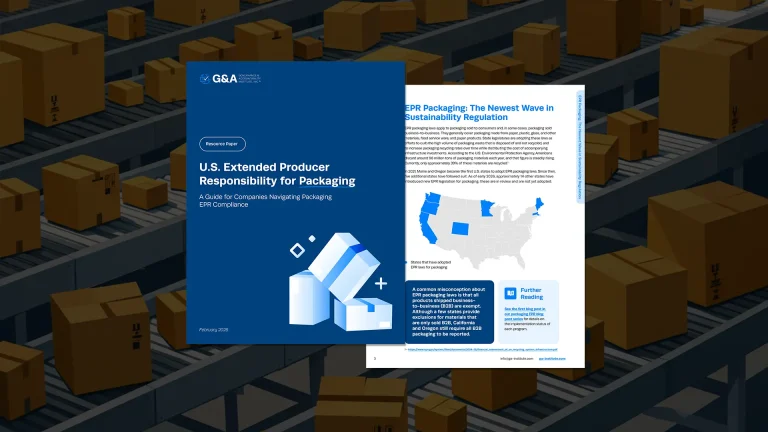
 February 10, 2026