 Return to blog
Key Highlights
- The VSME standard provides a structured framework to manage value chain ESG data requests efficiently
- Developed by EFRAG, it creates a common reference for suppliers and CSRD-reporting companies
- Standardization reduces duplicate questionnaires and inconsistent sustainability data requests across value chains
- VSME improves data quality, comparability, and supplier engagement in sustainability reporting
Part of the Omnibus I Package was an intent to reduce the sustainability reporting burden on smaller companies. And in regulatory terms, it largely delivered: small and medium sized entities (SMEs) are no longer within the mandatory scope of the EU’s Corporate Sustainability Reporting Directive (CSRD). Additionally, the revised CSRD refers to “protected undertakings,” establishing the principle that disclosure requests should be proportional to the company’s size and presumed capacity to prepare sustainability disclosures. The protected undertakings principle effectively constrains what large companies can reasonably ask of their smaller value chain partners. On paper, pressure on both large companies and SMEs has been relieved.
In practice, a new challenge is emerging.
The Challenge: Fragmented Data Requests for SMEs
Large companies subject to CSRD still require sustainability data from their value chains to fulfill reporting requirements. Investors, lenders, and customers continue to request this information as well. With SMEs now out of scope for the CSRD, there is less regulatory pressure to standardize SME disclosures. One result is that the market is seeing a rise in customized questionnaires – each company develops its own set of questions to meet specific reporting needs, which often results in multiple requests being sent to the same SME teams. Instead of reducing the burden, this shift may actually increase fragmentation and complexity for SMEs.

This is precisely the problem the Voluntary Standard for SMEs (VSME) was built to solve.
Developed by EFRAG and endorsed by the European Commission, the VSME provides large CSRD reporters with an EU-endorsed reference for reasonable value chain data requests. This helps coordinate expectations, protects SMEs from excessive demands, and supports the data quality and consistency needed for effective supply chain sustainability reporting.
Next Steps: Understand the VSME
For large companies reporting under CSRD, the VSME introduces benefits like a consistent approach to supplier engagement, avoiding the need for custom questionnaires, and fostering more comparable value chain data.
For SMEs, the Standard clarifies what constitutes reasonable sustainability disclosure, helping reduce the effort required to answer varied requests. Instead, they can disclose information within one process that aligns with the frameworks that matter to their larger business partners.
For practitioners working through reporting requirements, whether managing CSRD value chain obligations at a large company or responding to requests as a smaller one, it is important to have a clear and structured reference.
While regulatory requirements may change, the need for reliable value chain sustainability data remains. Investors, lenders, customers, and regulators continue to expect clear ESG information from companies of all sizes. The VSME provides a practical tool for companies aiming to engage their supply chains in a way that is proportionate, consistent, and aligned with evolving EU expectations.
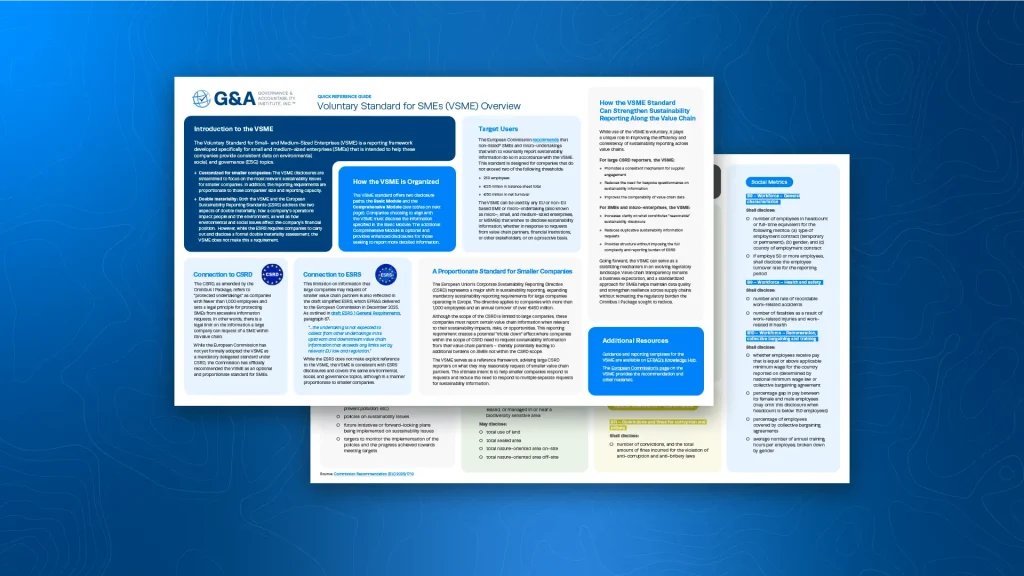
G&A’s VSME Quick Reference Guide outlines the VSME’s purpose, structure, and disclosure requirements under both the Basic and Comprehensive Modules. The guide also explains how the VSME fits into the wider EU regulatory context, including its connections to CSRD, ESRS, and the Omnibus I amendments.

Build your CSRD and ESRS strategy.
Founded in 2006, Governance & Accountability Institute (G&A) is a New York–based sustainability consulting and research firm advising corporate leaders and investors at the intersection of strategy, governance, and regulation. For nearly two decades, we have partnered with executive teams and boards to translate sustainability strategy into durable enterprise value — helping organizations navigate shifting market expectations, evolving policy landscapes, and increasing capital markets scrutiny. For support assessing your organization’s CSRD and ESRS readiness, reach out to G&A’s team of sustainability and climate analysts.



Share This Article

 How Can G&A Help?
Build your sustainability strategy.
Chat with our experts to get started on your journey.
Get Started
