 Return to blog

Key Highlights
- Scope 3 Category 1 emissions (purchased goods and services) are often the largest share of a company’s carbon footprint
- Engaging suppliers is essential to achieving Scope 3 reduction targets and driving value chain decarbonization
- Companies should prioritize high-impact suppliers using spend-based analysis and hotspot identification
- Transitioning to supplier-specific emissions data enables accurate tracking and meaningful reductions over time
Companies that actively engage their value chain to reduce greenhouse gas emissions—meaning that they work with partners across their upstream (suppliers) and downstream (distributors, customers) to drive sustainability improvements—are significantly more likely to achieve their Scope 3 reduction targets than companies that do not.1
Of the 15 types (“categories”) of value chain emissions, Category 1—emissions from purchased goods and services—is applicable to every company, and it often holds significant potential for emissions reductions. For this reason, engagement with suppliers to reduce Category 1 emissions is often a necessary, and effective, emissions reduction strategy.
However, companies face common obstacles in building the capacity needed to drive reductions in this area that are meaningful enough to meet ambitious Scope 3 targets – such as Science-based Targets or other stakeholder reduction requirements.
Below, G&A’s analysts present solutions to five hurdles that clients often share with us regarding Scope 3, Category 1 emissions reductions.
Common Hurdle #1: “We have hundreds (or thousands) of suppliers! There is no way we can reach out to all of them.”
The Solution: The GHG Protocol’s Supplier Engagement Guidance2 suggests ranking suppliers according to their contribution to GHG emissions—or by spend data, if emissions quantities are unknown.
Generally, suppliers selected for engagement should represent 20% of the organization’s known or projected GHG emissions, or 20% of the total supplier spend data.
Once suppliers and spend are identified, initial Category 1 estimates can be calculated using industry average emission factors—this is known as the spend-based method, which establishes a solid starting point for companies early in the process of calculating Scope 3 emissions.
How G&A Can Help: Our team helps companies to identify whether their Category 1 emissions are considered material, and thus important to calculate. From there, we gather top suppliers from you and apply the relevant emission factors to calculate these emissions in line with the GHG Protocol.

Common Hurdle #2: “We need to show reduction in Category 1 emissions, but the spend-based calculation method doesn’t capture supplier-specific changes year-over-year.”
The Solution: meaningfully track changes in Category 1 emissions, you need to directly engage your suppliers to obtain supplier-specific emissions factors. While the spend-based method described above provides a ballpark estimate of supplier emissions, it relies on industry averages, which limits your ability to identify and report supplier-specific emissions reductions over time.
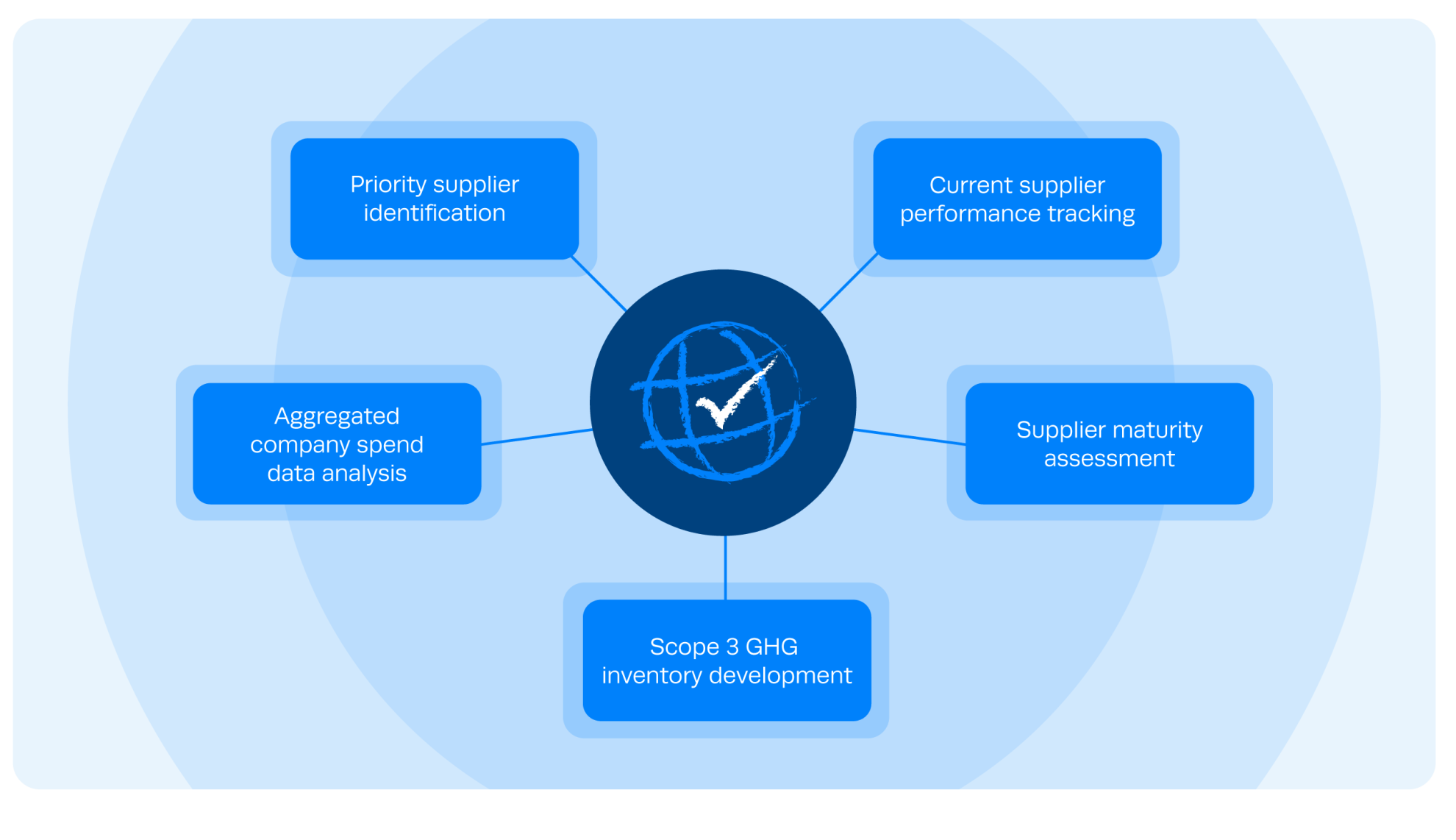
How G&A Can Help: G&A provides the tools, resources, and expertise needed to effectively identify your priority suppliers to engage, conduct outreach to obtain the specific data needed, and incorporate supplier-specific Category 1 data into your inventory.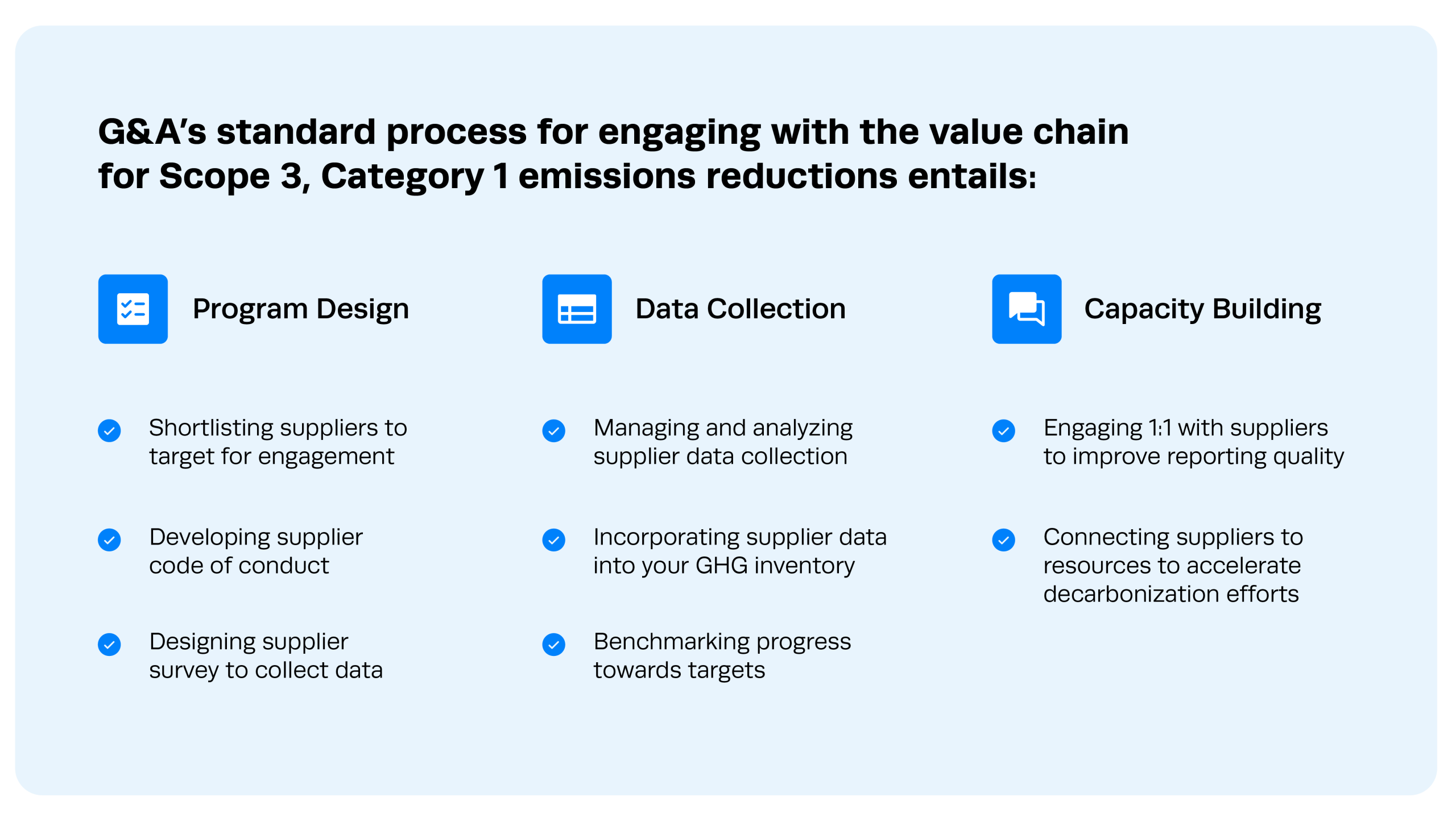
Because the bulk of corporate GHG emissions are typically concentrated in Scope 3—often in Category 1—many companies set supplier engagement Scope 3 targets with SBTi, expanding responsibility for decarbonization from just their company to suppliers along the value chain. Bringing suppliers along the emissions reduction journey is essential to achieving Scope 3 targets.”
Annie Roberts, SVP, Climate Consulting
Common Hurdle #3: “Our procurement team is focused on quality, price, and efficiency. They aren’t familiar with the topic of sustainable procurement and can’t lead this work.”
The Solution: Empower buyers to pursue GHG emissions reductions through their purchasing decisions. Provide targeted training to build comfort with best practices in sustainable procurement.
How G&A Can Help: At G&A, our team of sustainability experts works with companies to identify high-impact supplier engagement opportunities, such as focusing on a certain emissions-intensive materials or high-volume suppliers. Through targeted training sessions and workshops, we help procurement teams understand and apply best practices in sustainable procurement. We will work with you to design a roadmap that aligns your purchasing team around an appropriate goal and ensure your team has access to the right tools. You can create confident buyers who understand the unique role they play in reducing emissions.
Common Hurdle #4: “Our suppliers don’t track sustainability metrics. We can’t ask them to add this to their plate.”
The Solution: Educate suppliers on the importance of emissions tracking through workshops or other guidance, and how it will increase their competitive advantage. Chances are that your company is not the only one asking your suppliers for sustainability data. Work with them to help identify how to start, what they can do over time, and what support they need.
How G&A Can Help: At G&A, we develop custom content and solutions tailored to your suppliers’ unique needs. We can help you meet your suppliers where they are at, encourage improvement where needed, and reward progress.
Common Hurdle #5: “Our suppliers receive competing data requests from various customers, which creates challenges in timely data collection and metric alignment.”
The Solution: Streamline the request by focusing on the basics, such as GHG information. Review supplier sustainability requirements from the top organizations in your industry or recommended best practices by industry group.
How G&A Can Help: At G&A, we help clients identify the necessary data points to request from suppliers to support their own disclosures. Thanks to our experience working with complex supply chains across industries, we understand the commonalities across supplier information requests by industry. We can work with you to design a program that is responsive to the state of that industry while promoting increased ambition over time.
1 – According to EcoVadis and Boston Consulting Group (BCG) 2025 ‘Carbon Action Report’.
2 – Supplier Engagement Guidance, GHG Protocol (2022)

G&A Can Help
Reach out today to discuss how we can work together to manage and reduce your supply chain emissions. For more information on Scope 3 emissions, and climate action more broadly, check out these resources:
- Scope 3 GHG Emissions Inventory
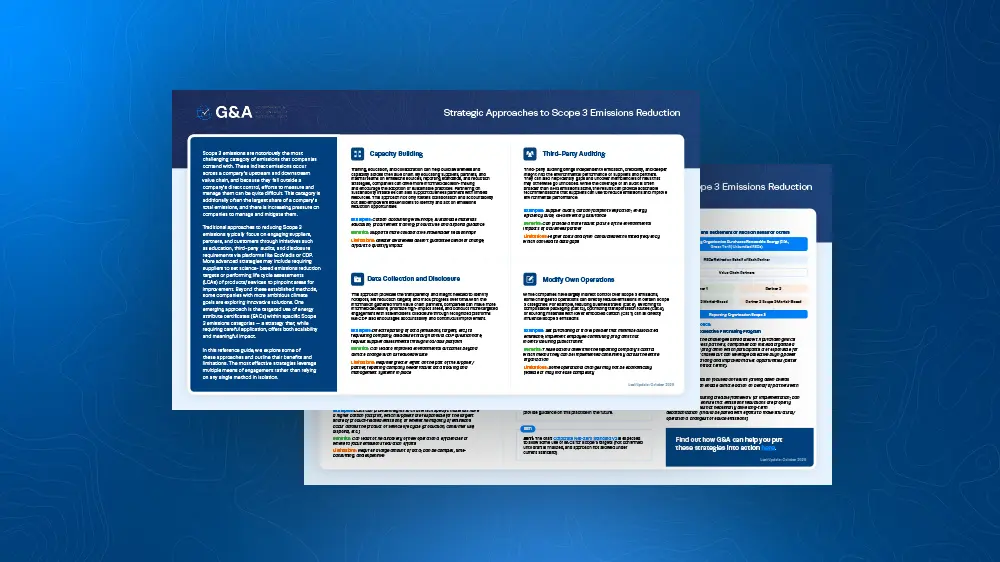
- Strategic Approaches to Reducing Scope 3 Emissions (Quick Reference Guide)
- ABCs of Corporate Climate Action (Quick Reference Guide)
- Scope 3, Category 1 Engagement Service



Share This Article

 How Can G&A Help?
Build your sustainability strategy.
Chat with our experts to get started on your journey.
Get Started
