 Return to blog

Key Highlights
- CDP (Carbon Disclosure Project) is the leading global system for environmental disclosure and ESG transparency
- CDP reporting evaluates climate, water, and forest impacts, including Scope 1, 2, and 3 emissions
- CDP scores are used by investors, customers, and supply chains to assess risk and sustainability performance
- Participation strengthens climate strategy, risk management, and competitive positioning in global markets
CDP is a global non-profit that runs the world’s most comprehensive environmental disclosure system for entities of all kinds – companies, capital markets, cities, states, and regions – to manage their environmental impacts.
Originally known as the Carbon Disclosure Project, CDP is now in its 25th disclosure cycle and has grown to be not only a questionnaire provider, but also a massive dataset built on companies’ responses, which offers insights to investors and other stakeholders in making sustainability decisions.
The benefits extend to the reporting entities themselves, as well. According to CDP, companies that choose to disclose observe a 7-10% reduction in direct emissions within two years reporting to the questionnaire. Furthermore, companies reporting to CDP represent over half of global market capitalization.
In the first blog of our “2026 CDP Response Cycle” series, this article explains how CDP works, its scoring framework, and the impact on participating organizations, showing why it has become a credible source of environmental action worldwide.

How It Works
CDP is designed to reflect an organization’s maturity in understanding, managing, and adopting leading environmental practices. In 2024, CDP integrated a series of separate questionnaires on the reporter’s actions related to climate change, water security, and forests into a single questionnaire. It also includes plastics, and for the 2026 reporting cycle, will request data about ocean impacts.
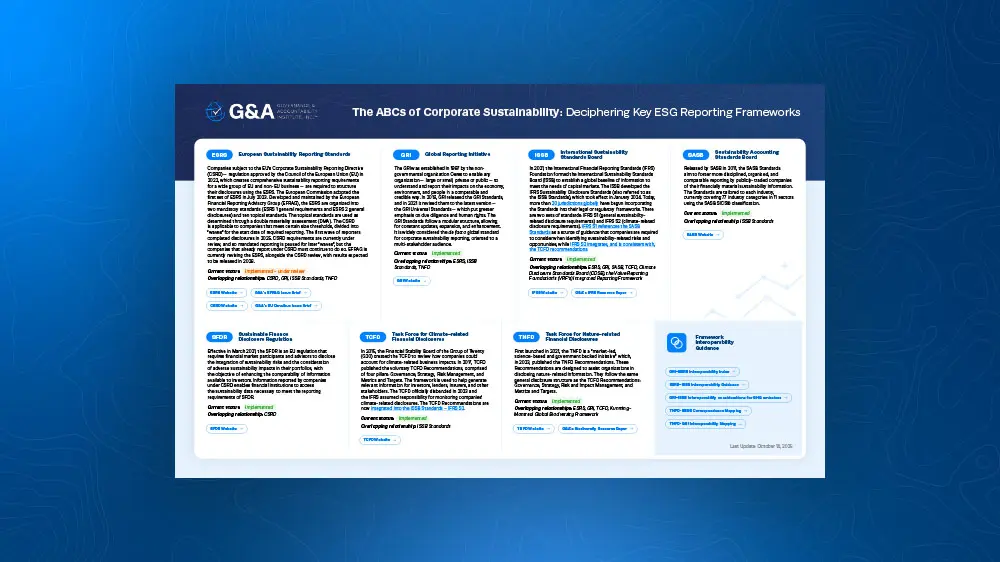
Regarding the broader landscape of corporate disclosures, CDP follows a “write once, read many” philosophy, aiming to enable companies to meet multiple framework and regulatory expectations through a single, comprehensive disclosure. Instead of preparing separate reports for each standard, organizations can streamline their efforts by reporting once through CDP, which then aligns their responses with multiple leading global frameworks and emerging regulatory requirements, such as:
- Greenhouse Gas (GHG) Protocol
- Accountability Framework initiative (AFi) for Forests
- CEO Water Mandate
- International Financial Reporting Standards (IFRS) S2 Climate-related Disclosures
- European Sustainability Reporting Standards (ESRS)
- Task Force on Nature-related Financial Disclosures (TNFD) recommendations
- Task Force on Climate-related Financial Disclosures (TCFD)
- Global Reporting Initiative (GRI) Standards
- Sustainable Finance Taxonomies
Scoring Framework
CDP’s scoring framework evaluates how thoroughly a company discloses its environmental data, how well it understands the risks and opportunities tied to nature-related issues, and the extent to which it is taking meaningful action.
The progression from Disclosure to Leadership, ranging from D‑ to A, signals the depth of integration of environmental considerations into the company’s governance, strategy, and operations. Only those demonstrating the highest level of environmental stewardship are awarded a place in CDP’s A List.
CDP defines the score levels as follows:
- Disclosure (D-/D): measures the completeness of an organization’s reporting
- Awareness (C-/C): measures the comprehensiveness of an organization’s evaluation of how environmental issues intersect with their business
- Management (B-/B): measures whether organizations are managing their environmental impact and indicate whether they are undertaking actions that mark them out as a leader in their field
- Leadership (A-/A): measures if organizations are adopting best practices in the strategies they utilize and the actions they undertake
CDP Impact
In 2025, CDP requested disclosures on behalf of more than 640 investors holding $127 trillion in assets through its Capital Markets Signatories program. These institutions rely on CDP data to integrate environmental considerations into portfolios and investment decisions.
As of 2025/2026, some of the CDP highlights included:
- 23,100+ Total Disclosers Worldwide: This includes companies, cities, states, and regions.
- Sub-national Leadership: More than 1,000 cities and regions (representing over 1 billion people) now disclose to CDP, supporting their ability to track policies and progress towards net-zero.
- Supplier Engagement: 270+ entities requested data from a total of approximately 45,000 suppliers to provide CDP responses.
The 2026 Cycle
As organizations prepare for another year in evolving disclosure expectations, they may be looking towards the 2026 opening of the CDP response window during the week of June 15. The window will close the week of October 26, with scores being released the week of November 30.

Build your sustainability strategy.
Founded in 2006, Governance & Accountability Institute (G&A) is a New York–based sustainability consulting and research firm advising corporate leaders and investors at the intersection of strategy, governance, and regulation. For two decades, we have partnered with executive teams and boards to translate sustainability strategy into durable enterprise value — helping organizations navigate shifting market expectations, evolving policy landscapes, and increasing capital markets scrutiny. Set up a call to learn more about how we can help your company.



Share This Article

 How Can G&A Help?
Build your sustainability strategy.
Chat with our experts to get started on your journey.
Get Started
